


Auditory and hearing aid assessment and rehabilitation clinic
March 11, 2018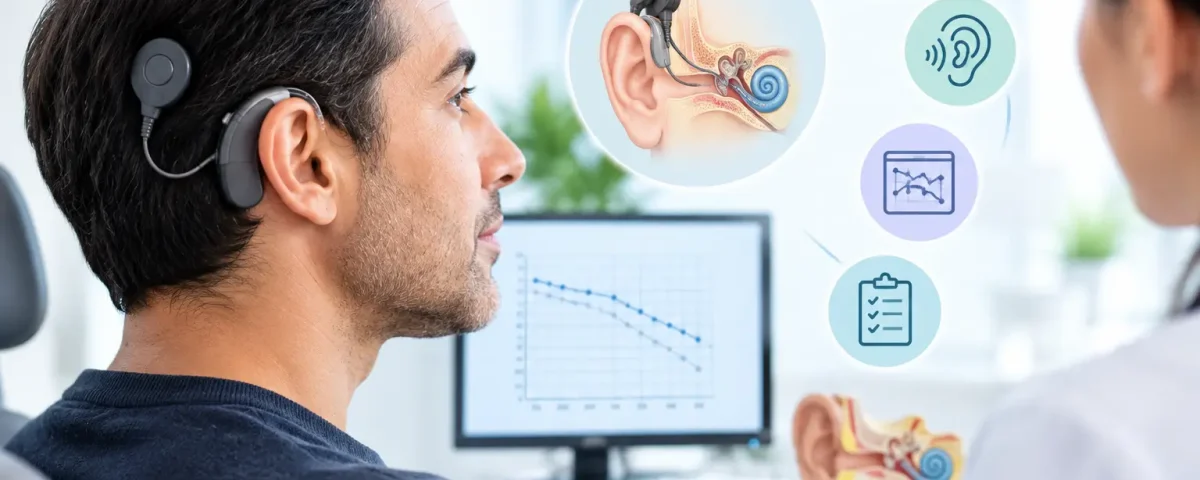
A cochlear implant is an advanced treatment option for people with severe to profound sensorineural hearing loss who do not receive enough benefit from appropriately fitted and properly used hearing aids. Unlike hearing aids, which amplify sound, a cochlear implant bypasses damaged parts of the inner ear and directly stimulates the auditory nerve, allowing sound information to reach the brain.
However, a cochlear implant is not the right option for everyone with hearing loss. Determining whether someone is a suitable candidate requires a comprehensive evaluation, including hearing tests, assessment of the ear and auditory nerve, imaging studies, and an evaluation of how much benefit the person receives from hearing aids. Outcomes can also vary depending on factors such as age, the duration and cause of hearing loss, the condition of the auditory nerve, and participation in auditory rehabilitation.
If you are unsure whether a cochlear implant may be appropriate for you or your child, an evaluation by an otology specialist, Professor Motasaddi, and the cochlear implant team can help determine whether this treatment is a suitable option.
What Is a Cochlear Implant?
A cochlear implant is an electronic medical device designed to provide access to sound for people with severe to profound hearing loss.
The system generally consists of two main components:
- An external component, worn behind the ear, which includes a microphone, sound processor, and transmitter.
- An internal component, surgically placed beneath the skin and within the skull bone, which contains the receiver/stimulator and an electrode array positioned inside the cochlea.
The microphone picks up sounds from the environment, and the sound processor converts them into electrical signals. These signals are transmitted to the internal component, where the electrodes stimulate the auditory nerve.
A cochlear implant does not restore normal, natural hearing. Instead, it provides the brain with a different way of receiving sound. Over time, the brain learns to interpret these electrical signals as meaningful sounds. This is why device programming and auditory rehabilitation are important parts of the treatment process.
Is a Cochlear Implant Different from a Hearing Aid?
Yes.
Hearing aids primarily amplify sound so that the damaged ear can detect it more effectively. A cochlear implant, on the other hand, bypasses damaged structures in the inner ear and directly stimulates the auditory nerve with electrical signals.
For this reason, cochlear implantation is generally considered when appropriately fitted hearing aids no longer provide enough access to speech and other important sounds.
Who Is a Candidate for a Cochlear Implant?
Candidacy for cochlear implantation is not determined by a single hearing test result or one specific hearing threshold. Specialists consider a combination of hearing-related, medical, anatomical, and functional factors.
In general, people with severe to profound sensorineural hearing loss who continue to have significant difficulty understanding speech despite appropriate hearing-aid use may be referred for a cochlear implant evaluation.
The 2024 American Cochlear Implant Alliance guidelines emphasize that individuals who receive limited benefit from their current hearing aids and are seeking better hearing should be considered for a cochlear implant evaluation, including those whose results fall within a borderline range. Having some residual hearing alone does not necessarily rule out cochlear implantation.
Cochlear implant candidacy criteria have also evolved in recent years. As a result, it is no longer appropriate to determine candidacy solely on the basis of older criteria, such as having extremely severe hearing loss in both ears.
Cochlear Implants in Adults
Adults with severe or profound hearing loss who are unable to communicate effectively despite using hearing aids may be suitable candidates for cochlear implantation.
The length of time a person has experienced hearing loss is an important consideration, but long-standing hearing loss does not automatically mean that cochlear implantation is no longer an option. Research shows that adults who have lived with hearing loss for many years can still experience improvements in hearing and quality of life after implantation, although the duration and underlying cause of hearing loss may influence both the extent and speed of improvement.
Cochlear Implants in Children
For children, the timing of hearing loss diagnosis and treatment is particularly important because the early years of life are a critical period for the development of auditory pathways and language skills.
The American Academy of Otolaryngology–Head and Neck Surgery emphasizes that children with bilateral severe to profound sensorineural hearing loss who receive limited benefit from hearing aids should be evaluated for cochlear implantation as early as possible. In appropriately selected children, implantation during the first months of life may be associated with better auditory and language outcomes.
However, the decision to implant a child should always be individualized. Hearing test results, speech and language development, hearing-aid use, the anatomy of the inner ear and auditory nerve, and the child’s overall health and developmental circumstances all need to be considered.
Does Hearing Loss in One Ear Rule Out Cochlear Implantation?
No.
In recent years, clinical evidence and guidelines regarding cochlear implantation for single-sided or asymmetric hearing loss have continued to evolve.
Single-sided hearing loss does not automatically rule out cochlear implantation. Instead, candidacy should be assessed on an individual basis, taking into account the person’s hearing difficulties, speech understanding, tinnitus, ability to localize sounds, and overall impact on quality of life.
Evaluation Before Cochlear Implantation
Before surgery is considered, patients typically undergo a comprehensive, multi-step evaluation. The goal is not simply to measure the severity of hearing loss, but to determine whether a cochlear implant is likely to provide meaningful benefit.
Hearing Evaluation
A series of hearing tests is performed to determine hearing thresholds and assess the function of each ear.
In addition to standard audiometry, speech perception testing is often particularly important. In adults, standardized word and sentence recognition tests performed in quiet and, when appropriate, in noise can help determine how well a person actually benefits from their hearing aids.
Assessing Hearing-Aid Benefit
One of the most important questions is how well the patient can hear and understand speech while using appropriately fitted and programmed hearing aids.
If significant communication difficulties persist despite proper hearing-aid use, a cochlear implant evaluation becomes more relevant. Simply owning hearing aids or using them for a short period is not enough to determine candidacy.
Evaluation of the Inner Ear and Auditory Nerve
Imaging studies may be recommended to assess the anatomy of the inner ear and cochlea.
CT scans can provide detailed information about the bony structures of the cochlea, while MRI can be useful for evaluating soft tissues and structures such as the auditory nerve. The type of imaging required depends on the individual patient’s condition and clinical history.
Medical and Surgical Evaluation
The patient’s overall health, history of ear disease or infections, previous ear surgery, current medications, and suitability for anesthesia are also reviewed.
In some patients, the anatomy of the cochlea or the condition of the auditory nerve may affect the treatment plan. This is why a thorough medical and surgical assessment is an essential part of the process.
Expectations and Rehabilitation Assessment
Cochlear implantation is much more than a surgical procedure. Once the device is activated, the brain needs time to learn how to interpret the new auditory signals.
For this reason, the patient’s expectations, motivation, ability to attend programming and rehabilitation sessions, and—particularly in children—the level of family support can all play an important role in the rehabilitation process.
What Are the Steps of Cochlear Implantation?
The treatment journey varies from one patient to another, but it generally involves the following stages:
1. Initial Consultation and Evaluation
The otology specialist and audiologist review the patient’s hearing history, medical background, and current hearing difficulties.
2. Hearing and Speech Testing
The degree of hearing loss, hearing performance in each ear, and speech perception with and without hearing aids are evaluated.
3. Imaging and Additional Testing
When necessary, CT, MRI, and other medical assessments are performed to provide a more complete picture of the patient’s condition.
4. Determining Candidacy
The results are reviewed by the cochlear implant team to determine whether the expected benefits of implantation outweigh its potential risks and limitations.
5. Surgery
Once candidacy has been confirmed, the internal component of the implant is surgically placed, and the electrode array is positioned inside the cochlea.
6. Recovery After Surgery
After surgery, the patient is monitored to ensure that the surgical site is healing properly and that there are no significant complications. The device is generally not activated immediately after surgery.
7. Device Activation and Programming
Once the surgical site has healed sufficiently, the external sound processor is activated and programmed. The exact timing of activation depends on the patient’s condition and the treatment team’s recommendations.
8. Rehabilitation and Ongoing Programming
After activation, patients typically attend follow-up appointments for device programming and auditory rehabilitation. For many people, hearing performance improves gradually as they gain experience with the device and practice listening.
Cochlear Implant Surgery
Cochlear implant surgery is usually performed under general anesthesia. During the procedure, the internal component is positioned beneath the skin and within the skull, and the electrode array is inserted into the cochlea.
Before surgery, the patient undergoes the necessary medical assessments to ensure that they are an appropriate candidate for the procedure and anesthesia.
After surgery, some patients may temporarily experience pressure or discomfort around the ear, dizziness, or nausea. These symptoms should be monitored and evaluated by the treating medical team.
Can You Hear Immediately After Cochlear Implant Surgery?
Usually, no.
Although the internal component is in place immediately after surgery, hearing through the implant begins only after the external sound processor has been activated and programmed.
Even after activation, the sound may not initially resemble natural hearing. The brain needs time to learn how to interpret the electrical signals produced by the implant. This is why regular programming and auditory rehabilitation are such important parts of recovery.
What Results Can You Expect From a Cochlear Implant?
The primary goal of cochlear implantation is to provide better access to sound and speech. However, results vary considerably from one person to another.
Research has shown that cochlear implantation can improve hearing and, for many patients, contribute to a better quality of life.
In people with single-sided hearing loss, systematic reviews have also reported improvements in speech understanding in noise, sound localization, tinnitus, and quality of life following cochlear implantation.
What Factors Affect Cochlear Implant Outcomes?
Several factors can influence the results, including:
- The age at which hearing loss began
- The duration of hearing loss
- The underlying cause of hearing loss
- The condition of the auditory nerve and inner ear
- The amount of residual hearing
- How much benefit the patient receives from hearing aids
- Age at implantation, particularly in children
- The patient’s ability and motivation to use the device consistently
- The quality of device programming
- Participation in auditory and speech rehabilitation
Because outcomes vary, it is not possible to guarantee a specific level of hearing before a comprehensive evaluation.
What Is the Best Age for a Cochlear Implant?
There is no single age that is considered ideal for every patient.
For children with severe to profound hearing loss, evidence supports early diagnosis and intervention because the early years of life are particularly important for auditory and language development. Some studies have also found that implantation during the first year of life can be associated with favorable auditory outcomes.
For adults, older age alone is not a reason to exclude someone from cochlear implantation. Overall health, hearing performance, the duration and cause of hearing loss, and the amount of benefit obtained from hearing aids should all be considered alongside age.
Risks and Limitations of Cochlear Implants
Like any surgical procedure, cochlear implantation carries potential risks. Most patients recover without serious complications, but understanding the possible risks is an important part of making an informed decision.
Potential complications may include:
- Pain, swelling, or discomfort around the surgical site
- Infection
- Dizziness or balance problems
- Tinnitus
- Changes in taste
- Numbness around the ear
- Leakage of inner-ear fluid or cerebrospinal fluid
- Facial nerve injury
- Complications related to anesthesia
- Damage to or loss of some remaining hearing
- Device malfunction or displacement, which may occasionally require revision surgery
Serious complications such as meningitis are rare. However, vaccination status and individual risk factors should be reviewed before surgery.
Another important consideration is MRI safety. Not all cochlear implants have the same MRI requirements. Some devices are MR Conditional, meaning MRI can be performed only under specific conditions.
Patients should always know the exact make and model of their cochlear implant and inform both their physician and the imaging center before undergoing an MRI.
Cochlear Implant vs. Hearing Aid
Hearing aids are designed for people whose auditory system can still make effective use of amplified sound. They capture environmental sounds and make them louder.
A cochlear implant works differently. It converts sound into electrical signals and directly stimulates the auditory nerve. For this reason, cochlear implantation is generally considered when appropriately fitted hearing aids no longer provide sufficient access to speech and other important sounds.
This does not mean that a cochlear implant is always “better” than a hearing aid. The appropriate option depends on the degree and type of hearing loss, hearing performance, speech perception results, and the patient’s individual circumstances.
Some people may also continue to use a hearing aid in the opposite ear after receiving a cochlear implant. This approach is known as bimodal hearing, and whether it is appropriate depends on the patient’s individual hearing profile.
Cost of Cochlear Implantation
The cost of cochlear implantation can vary considerably, and there is no single price that applies to every patient.
The overall cost may depend on factors such as the type and model of the implant, preoperative evaluations, surgery and hospitalization, device programming, auditory rehabilitation, and postoperative follow-up.
Insurance coverage and financial assistance for cochlear implant devices can also vary depending on the country, insurance provider, and individual circumstances.
Frequently Asked Questions About Cochlear Implants
Does a cochlear implant restore normal hearing?
No. A cochlear implant does not restore natural hearing. Instead, it provides access to sound by electrically stimulating the auditory nerve. The quality and perception of sound through the implant can therefore be different from normal hearing.
Can anyone with hearing loss receive a cochlear implant?
No. Candidacy depends on several factors, including the type and severity of hearing loss, the benefit obtained from hearing aids, the condition of the inner ear and auditory nerve, overall health, and the patient’s ability to participate in rehabilitation.
Is it necessary to use hearing aids before getting a cochlear implant?
For many patients, evaluating the benefit they receive from hearing aids is an important part of the candidacy assessment. However, there is no single required duration of hearing-aid use that applies to every patient. Modern guidelines place greater emphasis on the patient’s actual hearing performance and the benefit they receive from appropriately fitted amplification.
Can older adults receive cochlear implants?
Yes. Older age by itself does not rule out cochlear implantation. The patient’s overall health, hearing status, ability to use the device, and individual circumstances should all be taken into account.
Are cochlear implants performed in children?
Yes. Children who meet the appropriate criteria may receive cochlear implants at a young age. Early diagnosis and intervention are particularly important for children with severe to profound hearing loss because they can support the development of auditory and language skills.
Can you hear immediately after cochlear implant surgery?
Usually not. The device is activated and programmed after the initial healing period. After activation, the brain also needs time and practice to learn how to interpret the sounds delivered by the implant.
Does everyone achieve the same results with a cochlear implant?
No. Outcomes vary between individuals. Factors such as the duration of hearing loss, age, cause of hearing loss, auditory nerve function, consistent device use, and participation in rehabilitation can all affect the outcome.
Is rehabilitation necessary after cochlear implantation?
Yes. Device programming and auditory rehabilitation are important components of the treatment process. Modern clinical guidelines also emphasize ongoing follow-up, periodic programming, and individualized rehabilitation.
Can people with cochlear implants undergo MRI?
It depends on the specific implant model. Some implants are approved for MRI under specific conditions, while others have more restrictive requirements. Before an MRI, the exact implant model must be identified and the manufacturer’s safety instructions must be followed.
If I still have difficulty hearing with hearing aids, should I be evaluated for a cochlear implant?
If you continue to have significant difficulty understanding speech despite using appropriately fitted and programmed hearing aids—particularly during everyday conversations or in noisy environments—a cochlear implant evaluation may be appropriate.
Even when test results are borderline, a specialist evaluation can help determine whether cochlear implantation or another hearing rehabilitation strategy would be most appropriate.
When Should You Consider a Cochlear Implant Evaluation?
If you or your child continues to have difficulty hearing or understanding speech despite using hearing aids, it is important not to base the decision solely on the severity of hearing loss or on other people’s experiences.
A comprehensive evaluation by an otology specialist and audiologist can help determine whether continuing with hearing aids is the best option or whether further assessment for cochlear implantation is appropriate.
To find out whether you or your child may be a candidate for a cochlear implant, schedule a consultation with Professor Motasaddi’s specialized ear clinic for a comprehensive hearing and cochlear implant evaluation.